
Hello, welcome to my blog on Martyr’s, Monk’s, Saint’s, and Mayhem.
I have taken my time with what ancestors that I thought would be important to blog on via family history for me, and what to pass onto future generations of my family.
I want to talk about Martyr’s, Monk’s, Saint’s, the mayhem that surrounded them, their descendants, and where they are today. I want people to see them as individual humans, and not just historical figures via the way they changed history, and caused such mayhem doing it that horrible things where done to them in the name of the religious freedom’s that we have now this very day. Many may not be aware of the dark history that came before us now, and how many suffered and died so we can pray freely today.
They had families, were honorable and noble in nature, from what I can see, I know not any soul is perfect. I am grateful that I am here, and thankful to them for passing on generation to generation, never giving up.
The ancestors I will be going over in this blog include…
• Martin Luther – Monk – Priest – Protestant Reformer -Martyr
• Katharina Von Bora – Wife of Martin Luther – Nun – helper of Protestant Reformation
• Reverend Obadiah Holmes – Baptist Reformer in the United States of America – Martyr
• St. Margaret of Scotland – Queen – Saint – Wife of King Malcom – Mother of 3 Kings (maybe more)
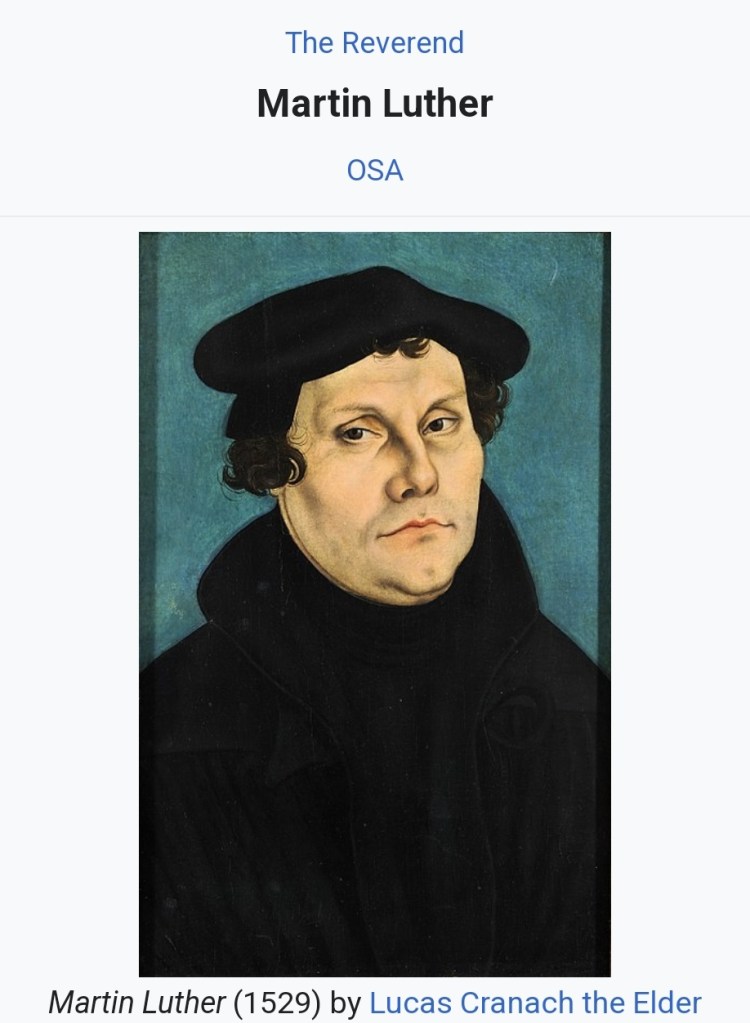
Martin Luther and Katharina von Bora
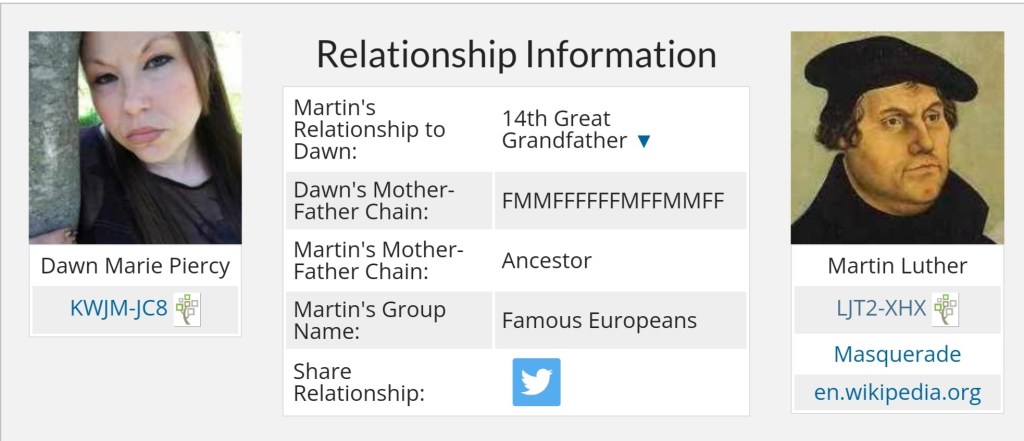
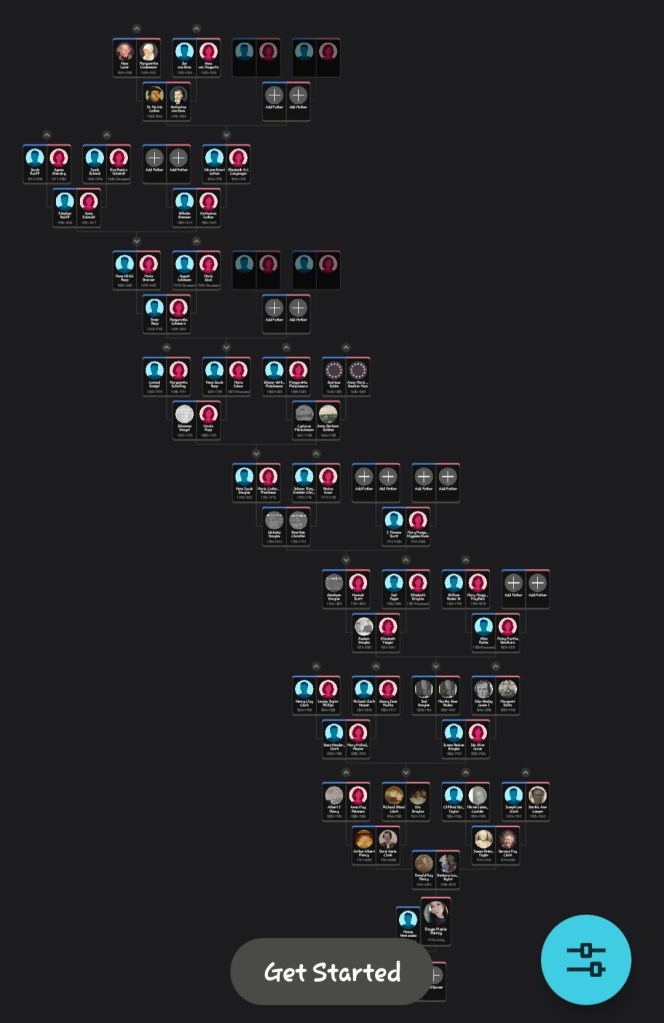
Martin Luther was born
10 November, 1483
In Eisleben, Grafschaft Mansfeld, Heiliges Römisches Reich (Deutscher Nation) and died– 18 February 1546
In Eisleben, Grafschaft Mansfeld, Heiliges Römisches Reich (Deutscher Nation) and was buried on
4 March, 1546
In Wittenberg, Kursachsen, Heiliges Römisches Reich (Deutscher Nation).
To the world he is known as a German priest, theologian, author, hymnwriter, professor, and Augustinian friar. He was the seminal figure of the Protestant Reformation, and his theological beliefs form the basis of Lutheranism.
And believe it or not, though I am descendant of him, and knew we were from Germany on my dad’s side after a breakthrough on the tree via source indexing, my family did not talk about ever having anyone famous in the family, aside from a couple individuals. I had no idea he was famous growing up, until I was in my 30’s taking a Genealogy class at the Family History Center and someone told me who he was. And now here I am, writing about him 7 yrs later.
Martin Luther was ordained as a priest by Jerome Schultz, Bishop of Brandenburg, in Erfurt Cathedral.
April 4, 1507
Erfurt Cathedral, Wittenberg, Kurfüstentum Sachsen HRR
Martin Luther received a Bachelor’s Degree of Biblical Studies
On March 9, 1508 at
University of Wittenberg, Kürfustentum Sachsen, HRR
He went on to receive his 2nd Bachelor’s Degree in the ‘Sentences’ by Peter Lombard
In 1509 at the
University of Wittenberg, Kürfustentum Sachsen HRR
Martin Luther then received a Doctorate of Theology by Andreas Bodenstein
On 19 October 1512 at the
University of Wittenberg, Kürfustentum Sachsen HRR
Chair of Theology
Martin Luther succeeded von Staupitz as Chair of Theology and was received into the Senate of the Theological Faculty of the University of Wittenberg.
21 October 1512
University of Wittenberg, Kürfustentum Sachsen HRR
Appointed as Vicar
Martin Luther was appointed Vicar of Saxony & Thuringia by St Augustine’s Monastery to oversee eleven monasteries in the province.
In 1515
Sachsen/Thuringia HRR
Was it really unintentional? Or, was it a Religious Revolution?
From what I read on my family tree in memories it says, legend has it that priest and scholar Martin Luther approaches the door of the Castle Church in Wittenberg, Germany, and nails a piece of paper to it containing the 95 revolutionary opinions that would begin the Protestant Reformation
On 31 October 1517
All Saints’ Church, Wittenberg, Kursachsen HRR
Excommunication
Martin Luther was excommunicated by Pope Leo X on 3 January 1521, in the bull Decet Romanum Pontificem.
Diet of Worms
The Diet of Worms takes place to decide Martin Luther’s fate with the Catholic Church and Pope Leo X concerning Luther’s condemnations of the indulgences of the church.
from 28 January 1521 to 25 May 1521
Freie Reichsstadt Worms, HRR
Luther an Outlaw
Holy Roman Empire Emperor Charles V delivered the Edict of Worms declaring Luther an outlaw, banning his literature, and requiring his arrest.
25 May 1521
Freie Reichsstadt Worms, HRR
After being declared an outlaw Martin Luther was intercepted by a benevolent Frederick III & escorted to Wartburg Castle at Eisenach in Thuringia. He spent the next 9 months translating the New Testament from Greek into German & expanding his criticisms of the Catholic Church while organizing his newly founded Lutheran Church.
from May 1521 to March 1522
Eisenach, Thüringen, HRR
Author of the text and composer of the music for the hymn “A Mighty Fortress Is Our God.”
Cited as both the author of the text and composer of the music for this hymn in Hymns of The Church of Jesus Christ of Latter-day Saints, published in 1985. Hymn #68.
Establishing his vision of the Church
Martin Luther worked to establish his new church order for people wanting to follow his lead. He wrote many letters, catechisms & established new church practices & services to include the masses into his new order of the Christian church. He also completed his translation of the Old Testament into German in 1534.
from March 1522 to February 1546
Wittenberg, Kursachen HRR
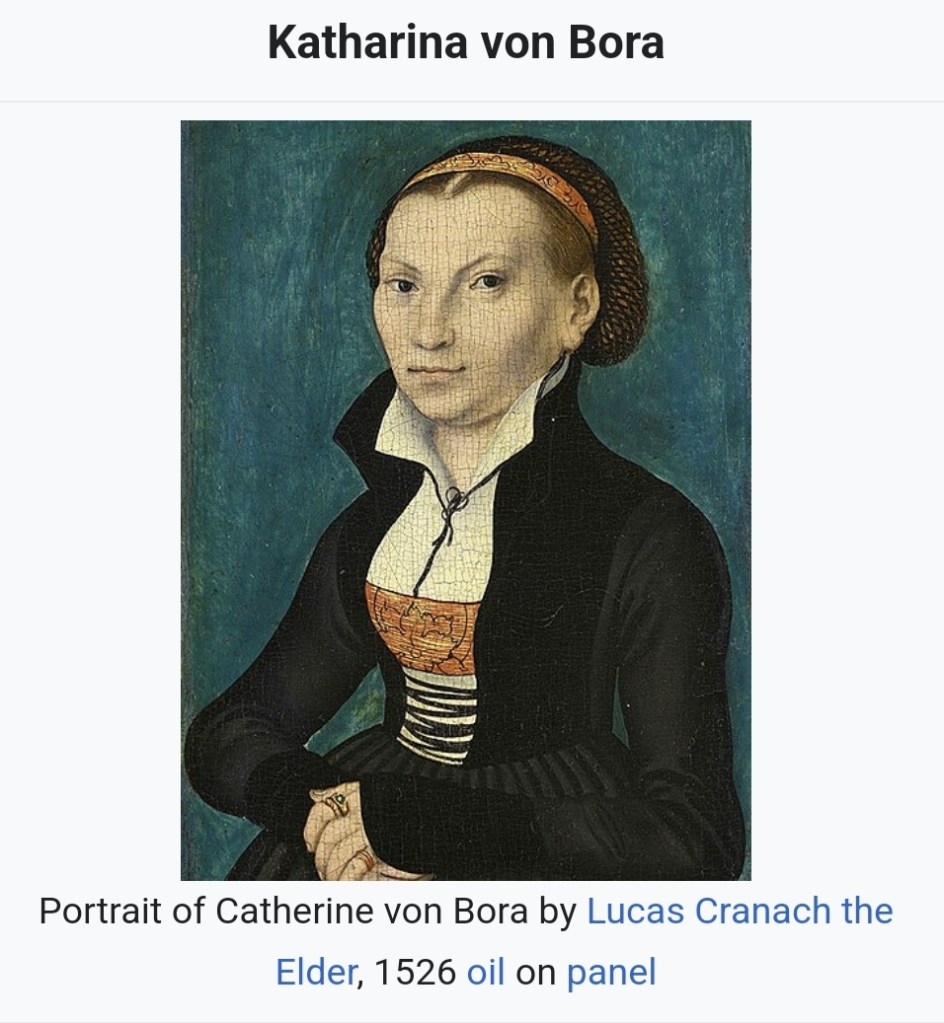
Katharina von Bora came from a family of the Saxon landed nobility. It is generally believed that she was born on January 29, 1499; this date is not documented. Because of the wide ramifications of her family and the uncertainty regarding the names of Katharina’s parents, there are different opinions about her place of birth in Lippendorf. More precisely, she was the daughter of the parents mentioned around 1500 and 1505, Johan von Bora auf Lippendorf and his wife Margarete, who came from a Lower Silesian family in the Principality of Sagan.
For a long time it was assumed without contradiction that her place of birth was Gut Lippendorf (district of Neukieritzsch) near Leipzig. This view is still adhered to in the specialist genealogical literature. Thereafter Katharina was probably the daughter of Johan von Bora auf Lippendorf, who was only safely occupied in 1500 and 1505, and his wife Margarete, who was also only mentioned in 1500 and 1505 and came from an otherwise unknown Lower Silesian family in the Principality of Sagan. Katharina had two sisters and three brothers.
In contrast to this, historical novels and short stories, as well as a document from the Saxon State Archives in Leipzig, state that she was born in Hirschfeld near Nossen and that her parents were Hans von Bora zu Hirschfeld and Anna von Haugwitz. The 800-year-old Romanesque stone baptismal font from the Hirschfeld Church [9], which is now in the cloister of Freiberg Cathedral, is associated with her. Hans and Elisabeth Pflugk are accepted as great-grandparents of Katharina von Bora who have not yet been documented.
Katharina von Bora born, 29 January 1499 – died 20 December 1552), after her wedding, Katharina Luther, also referred to as ‘die Lutherin’ (‘the Lutheress’), was the wife of the German reformer Martin Luther and a seminal figure of the Protestant Reformation. Although little is known about her, she is often considered to have been important to the Reformation, her marriage setting a precedent for Protestant family life and clerical marriage. This is the information on our family tree left by my 9th cousin. (Keeping name private)
Katharina married Martin Luther on 13 June 1525 in Wittenberg, Kursachsen, Heiliges Römisches Reich (Deutscher Nation)
She gave birth on
7 June 1526
Wittenberg, Wittenberg, Freistaat Sachsen, Deutschland to
Johann Ernst Luther, my 13th great-grandfather.
Johann married
Elizabeth K C Creyzinger 1563 Königsberg, Ostpreußen, Freistaat Preußen, Deutschland
Johann Ernst Luther to me.
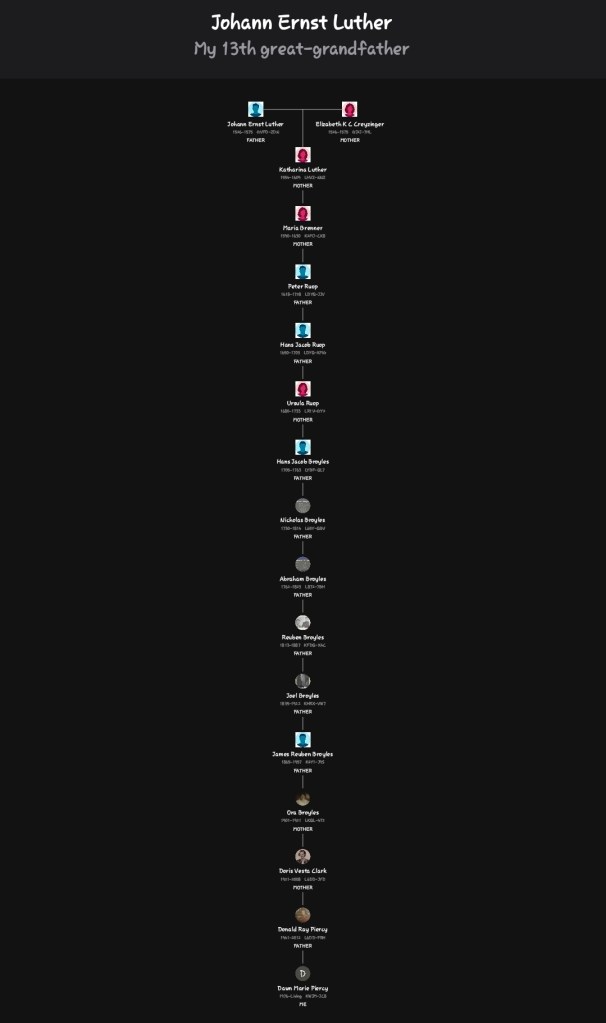
The first of this line to come to the United States of America was
Hans Jacob Ruop born
1 September 1650
Ötisheim, Maulbronn, Baden-Württemberg, Germany, and died
6 November 1703
Orange, Orange, Virginia, British Colonial America
His occupation States that he was a gravedigger and according to source indexing, his daughter was also born in Germany and died in America.
The offspring after traveled westward into the U.S. to the Ozarks in Missouri and back up into the Midwest States. The rest are scattered across the United States and elsewhere. There are thousands of us I’m sure.
Obadiah Holmes
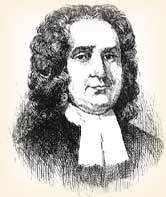
Obidah Holmes (b. 1610 – 15 d. October 1682) was an early Rhode Island settler, and a Baptist minister who was whipped in the Massachusetts Bay Colony for his religious beliefs and activism. He became the pastor of the Baptist Church in Newport, Rhode Island, a position he held for 30 years. (Wikipedia)
He grew up a bit on the wild side and eventually he saw his rebelliousness as being a cause of his mother’s death. He was married at the age of 20, and several years later emigrated from England to settle in Salem in the Massachusetts Bay Colony. He and two others began a glass making business there, but by 1645, he moved to Rehoboth in the Plymouth Colony.
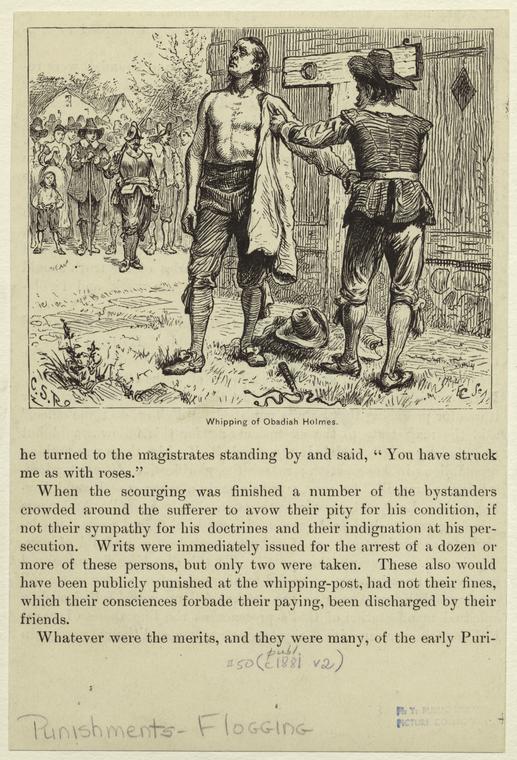
Obidiah settled in Newport, Rhode Island, and soon befriended John Clarke and John Crandall. In July 1651, these three men, while visiting an elderly friend in Lynn, Massachusetts, were apprehended, tried, and given exorbitant fines for their religious practices. Friends paid the fines for Clarke and Crandall, but Holmes refused to allow them to pay his fine, and 6 weeks after trial he was taken and whipped at the whipping post in Boston, he was given 30 strokes, which were laid on so harshly, that for weeks after the occurrence, Holmes could only sleep while on his knees and elbows.
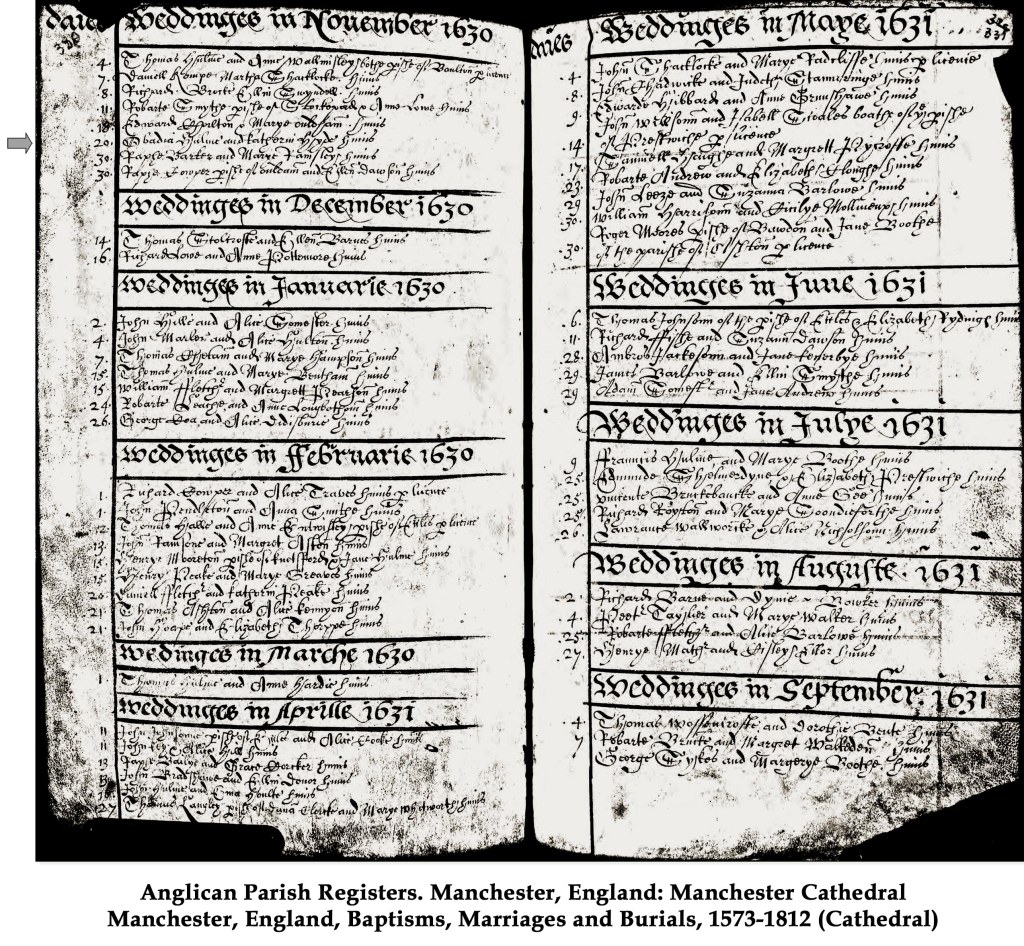
Holmes was married at the Collegiate church of Manchester on 20 November 1630 to Katherine Hyde.[2][3] His two brothers, Samuel and John, attended Brasenose College in Oxford, and Samuel received his Bachelor of Arts degree there in 1636.[2] In his writings, Holmes mentions another brother, Robert, but it is not clear whether it was Obadiah or Robert who attended college in Oxford as the third of three sons of his parents who went there. Most early writers on the subject assume that Holmes had spent some time at Oxford.[4][6]
In a 1675 writing about his early life, Holmes is very revealing about his character as a youth, writing, “Three sons they [his parents] brought up aright to the university at Oxford but the most of their care was to inform and to instruct them in the fear of the Lord and to that end gave them much good counsell [sic], bringing them often before the Lord by earnest prayer, but I the most rebellious of all did neither harken to counsel nor any instruction, for from a child I minded nothing but folly, and vanity… I was not only rebellious against my parents but against the Lord…continuing in such a course for four or five years… my rebellion to my honored parents then looked me in open face, and my dear mother being sick it struck me my disobedience caused her death, which forced me to confess the same to her, my evil ways and danger.”[4]
Baptized in Didsbury, Lancashire, England on 18 March 1609/10, Obadiah Holmes was the son of Robert Hulme (baptized 18 August 1578), and was the grandson of an earlier Robert Hulme who was buried at Stockport on 14 January 1604/5.
His mother’s name was Katherine Johnson and she married his father at Stockport on 8 October 1605. Baptisms during that timeframe, almost without exception, took place within a week of a birth.
In 1638, Holmes, with his wife and possibly son, sailed from Preston on the River Ribble in Lancashire to Boston in the Massachusetts Bay Colony. Soon after landing at Boston in the summer or early fall of 1638, he and his family made their way up the coast and settled at Salem. On 21 January 1639 Holmes received an acre of land for a house and a promise of ten more acres “to be laid out by the town.” Two months later, on 24 March 1639, he and his wife were admitted to the Salem church.
The authorities issued a new warrant to re-arrest Holmes, but his friends “defeated the purpose…by spiriting him away.” Holmes returned to Newport and when Dr. Clarke left for England in late 1651, Holmes succeeded him as minister of the First Baptist Church in Newport, and he held this position continuously (sharing the position when Clarke returned) until his death 30 years later.
Obadiah and Katherine Holmes had nine known children, one of whom, the first John, died in England in 1633, with the remainder growing to maturity. Jonathan, thought to be born in England, married Sarah Borden, and was active in colonial affairs, becoming speaker of the house of deputies. Holmes’ daughter Martha, born in 1640, married Captain Richard Stillwell, son of Lt. Nicholas Stillwell (who had helped found Gravesend), and his daughter Mary married John Brown, the son of early Baptist minister Chad Browne. His son Samuel settled in Gravesend, New York and married Alice Stillwell and his son Obadiah settled in Staten Island, New York. His son John married first Frances, the daughter of Randall Holden, and following her death married Mary Greene, the widow of William Greene, the daughter of John and Mary (Williams) Sayles, and the granddaughter of Roger Williams.[9] John was for many years the General Treasurer of the colony, and he and Joseph Sheffield were empowered to lease and settle the ferries in the colony. Obadiah Holmes’ other two children were Lydia who married John Bowne and Hopestill who married a Taylor.
Rhode Island Deputy Governor and Chief Justice John Gardner was a great grandson of Holmes, as was Deputy Governor Elisha Brown, but his best known descendant was United States President Abraham Lincoln, whose connection with Holmes was published by J. T. Holmes in his 1915 genealogy of the family. (Wikipedia)
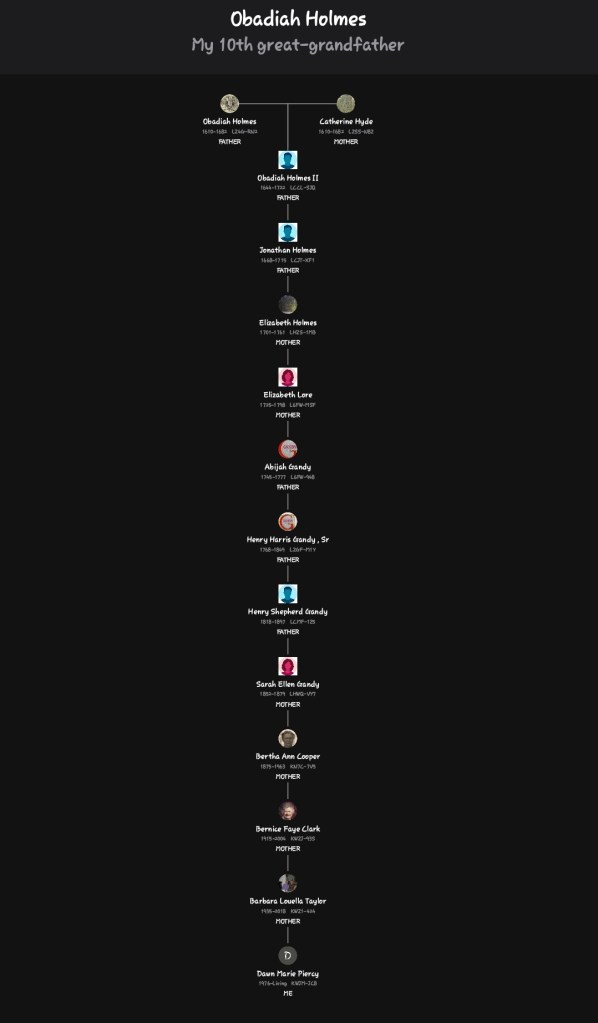
Below is a screenshot of Obadiah Holmes and Catherine Hyde, and the rest of their offspring to me.
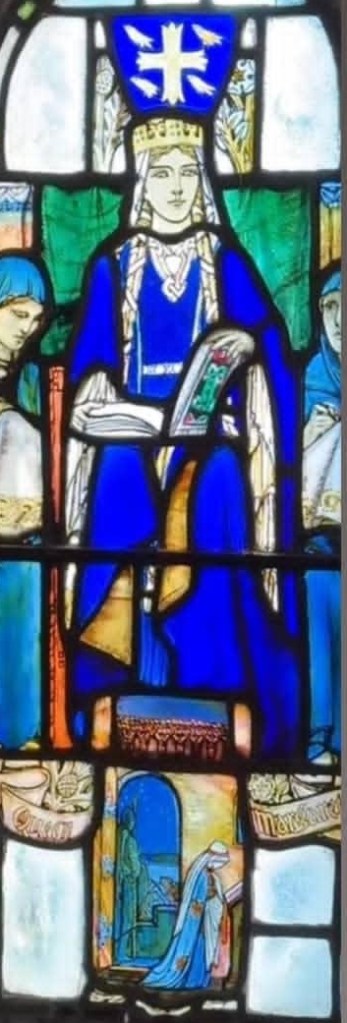
St. Margaret of Scotland
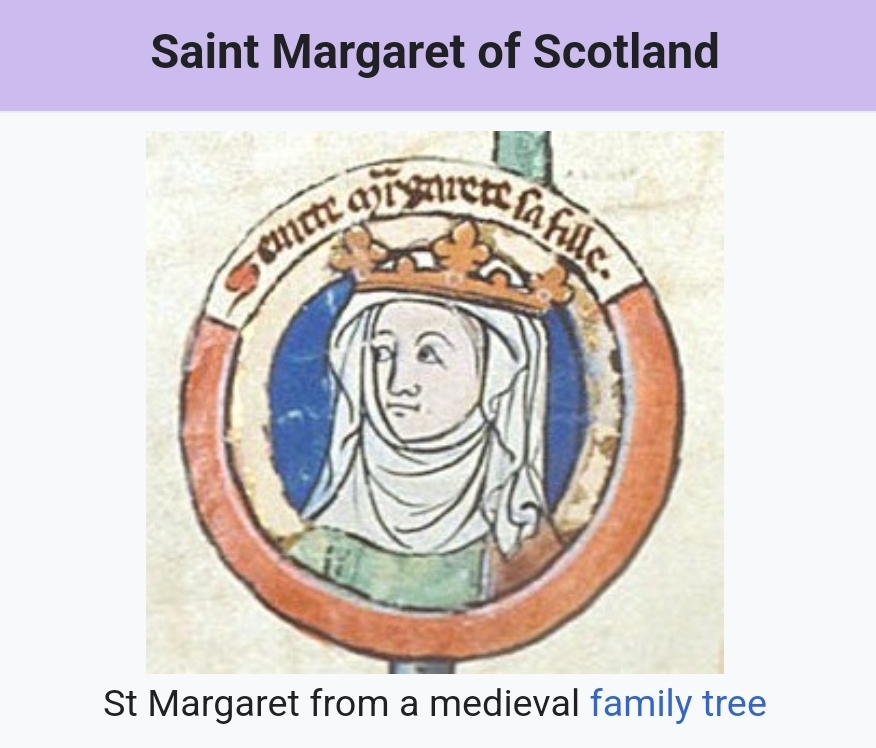
Saint Margaret of Scotland (Scottish Gaelic: Naomh Maighréad; Scots: Saunt Marget, c. 1045 – 16 November 1093), also known as Margaret of Wessex, was an English princess and a Scottish queen. Margaret was sometimes called “The Pearl of Scotland”.
BIRTH
Born in the Kingdom of Hungary to the expatriate English prince Edward the Exile, Margaret and her family returned to England in 1057. Following the death of Harold Godwinson at the Battle of Hastings in 1066, her brother Edgar Ætheling was elected as King of England but never crowned. After she and her family fled north, Margaret married Malcolm III of Scotland by the end of 1070. (Via Wikipedia)
Margaret was a very pious Christian, and among many charitable works she established a ferry across the Firth of Forth in Scotland for pilgrims travelling to St Andrews in Fife, which gave the towns of South Queensferry and North Queensferry their names. Margaret was the mother of three kings of Scotland, or four, if Edmund of Scotland (who ruled with his uncle, Donald III) is counted, and of Matilda of Scotland, queen consort of England. According to the Vita S. Margaritae (Scotorum) Reginae (Life of St. Margaret, Queen (of the Scots)), attributed to Turgot of Durham, Margaret died at Edinburgh Castle in Edinburgh, Scotland in 1093, merely days after receiving the news of her husband and son’s deaths in battle.
In 1250, Pope Innocent IV canonised her, and her remains were reinterred in a shrine in Dunfermline Abbey in Fife, Scotland. Her relics were dispersed after the Scottish Reformation and subsequently lost. Mary, Queen of Scots, at one time owned her head, which was subsequently preserved by Jesuits in the Scots College, Douai, France, from where it was lost during the French Revolution.
MOVED FROM HUNGARY TO ENGLAND
Margaret’s father Edward the Exile, the only living heir to the throne of England, returned to England to take his place as Heir Designate on 17 April 1057. He brought with him from Hungary his wife and children.
17 April 1057
London, Middlesex, England
Also important to note (not from Wikipedia) that unfortunately Margaret’s father died 2 days after their arrival in England. Margaret’s little brother, who was very young, became Edward the Confessor’s heir, and the family went to live at the English court.
MARRIAGE –BETROTHED TO MALCOLM III
According to ‘Orderic Vitalis’, In 1059 Malcolm III and Edward the confessor arranged for Margaret to marry Malcolm, the betrothal was not honored and could be the cause of the Scots invasion of Northumbria in 1061.
1059
London, Middlesex, England
Malcolm III was a widower, with two sons, Donald and Duncan, and would have been attracted to marrying one of the few remaining members of the Anglo-Saxon royal family. The marriage of Malcolm and Margaret occurred in 1070. Subsequently, Malcolm executed several invasions of Northumberland to support the claim of his new brother-in-law Edgar and to increase his own power. These, however, had little effect save the devastation of the county.
In her early life Margaret was the daughter of the English prince Edward the Exile and his wife Agatha, and also the granddaughter of Edmund Ironside, King of England. After the death of Ironside in 1016, Canute sent the infant Edward and his brother to the court of the Swedish king, Olof Skötkonung, and they eventually made their way to Kiev. As an adult, he travelled to Hungary, where in 1046 he supported the successful bid of King Andrew I for the Hungarian crown. The provenance of Margaret’s mother, Agatha, is disputed, but Margaret was born in Hungary about 1045. Her brother Edgar the Ætheling and sister Cristina were also born in Hungary around this time. Margaret grew up in a very religious environment in the Hungarian court.
Margaret and Malcolm had eight children – six sons and two daughters:
Edward (c. 1071 – 13 November 1093), killed along with his father in the Battle of Alnwick
Edmund (c. 1071 – post-1097)
Ethelred, abbot of Dunkeld, Perth and Kinross, Scotland
Edgar (c. 1074 – 11 January 1107), king of Scotland, reigned 1097–1107
Alexander I (c. 1078 – 23 April 1124), King of Scotland, reigned 1107–24
Edith (c. 1080 – 1 May 1118), renamed Matilda, queen of England
Mary (1082–1116), countess of Boulogne
David I (c. 1084 – 24 May 1153), king of Scotland, reigned 1124–53
SHIPWRECKED WHILE FLEEING
After William the Conqueror took the throne of England, Margaret and her family fled, possibly heading back to Hungary, and were shipwrecked off the coast of Scotland.
1068 / 1069 (information via personal family tree)
DEATH-DIED OF A BROKEN HEART
Margaret died 3 days after the death of her husband and oldest son reportedly of grief
16 November 1093
Castle of Maidens, Edinburgh, Scotland
Her husband Malcolm III, and their eldest son Edward, were killed in the Battle of Alnwick against the English on 13 November 1093. Her son Edgar was left with the task of informing his mother of their deaths. Not yet 50 years old, Margaret died on 16 November 1093, three days after the deaths of her husband and eldest son. The cause of death was reportedly grief. She was buried before the high altar in Dunfermline Abbey in Fife, Scotland. In 1250, the year of her canonization, her body and that of her husband were exhumed and placed in a new shrine in the Abbey. In 1560, Mary, Queen of Scots had Margaret’s head removed to Edinburgh Castle as a relic to assist her in childbirth. In 1597, Margaret’s head ended up with the Jesuits at the Scots College, Douai, France, but was lost during the French Revolution. Philip II of Spain had the other remains of Margaret and Malcolm III transferred to the Escorial palace in Madrid, Spain, but their present location has not been discovered. (Via Wikipedia)
CANONIZED AS SAINT MARGARET OF SCOTLAND
Canonized by Pope Innocent IV in recognition of her personal holiness, fidelity to the Church, work for religious reform, and charity.
19 June 1259
FEAST DAY OF SAINT MARGARET
The Feast of St Margaret is celebrated on November 16.
Below you will find the family tree of St. Margaret of Scotland, her parents, and the line I come from. I have also placed my family tree from her father to me. mtDNA test takes me back to certain tested individuals on my tree, and many of these people I have tested positive and have been matched to them to be able to know that I do come from them.
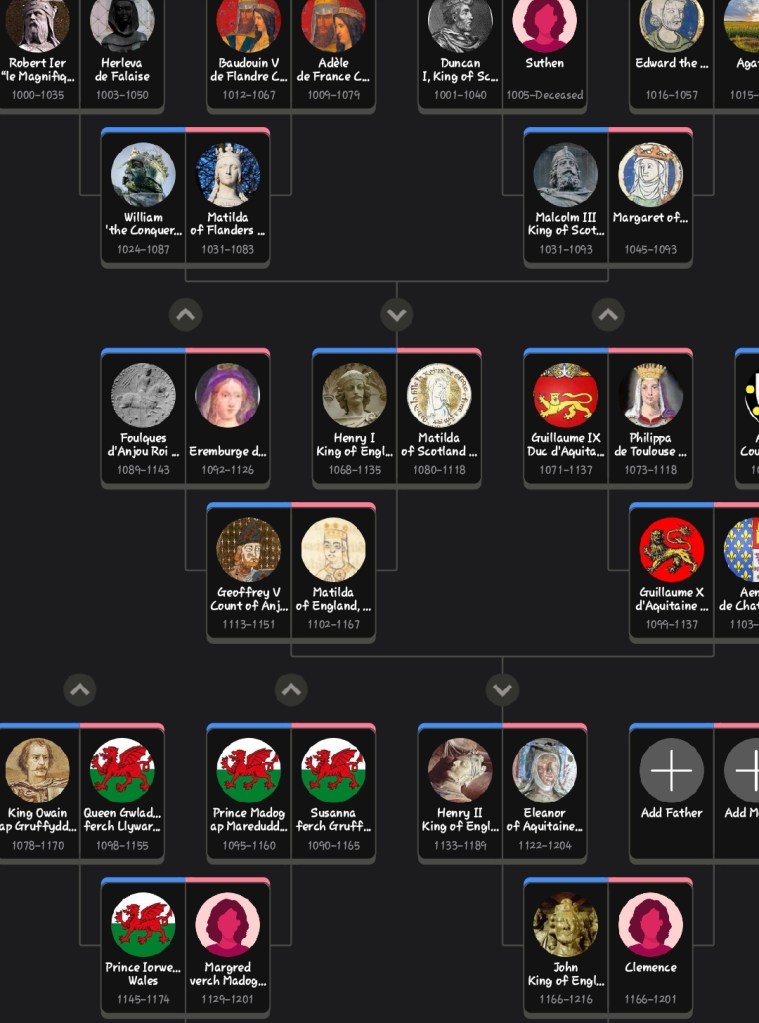
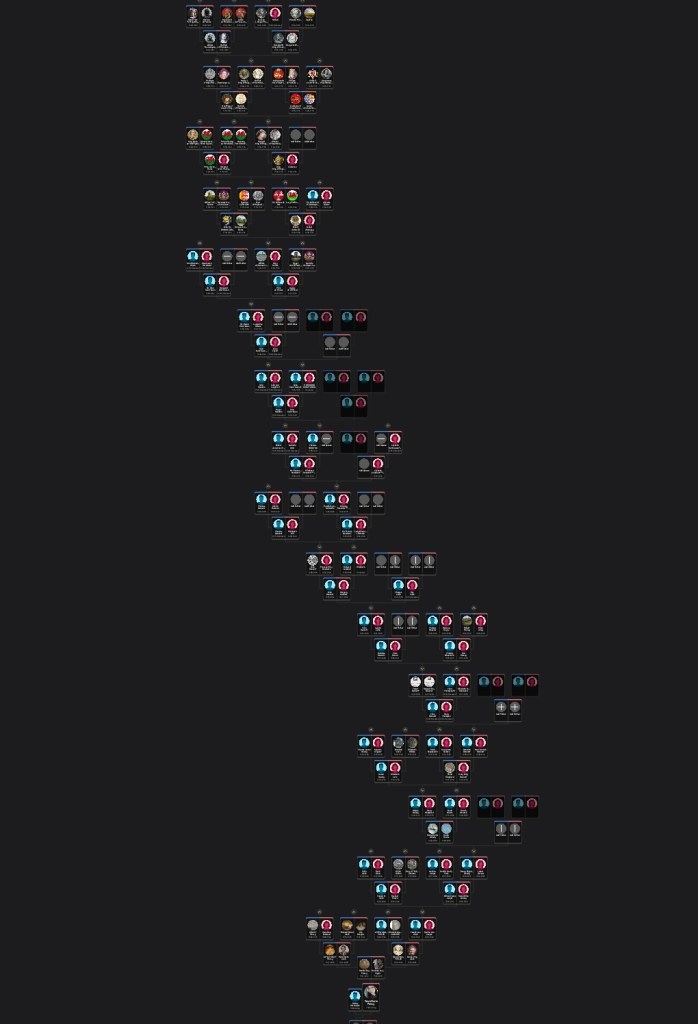
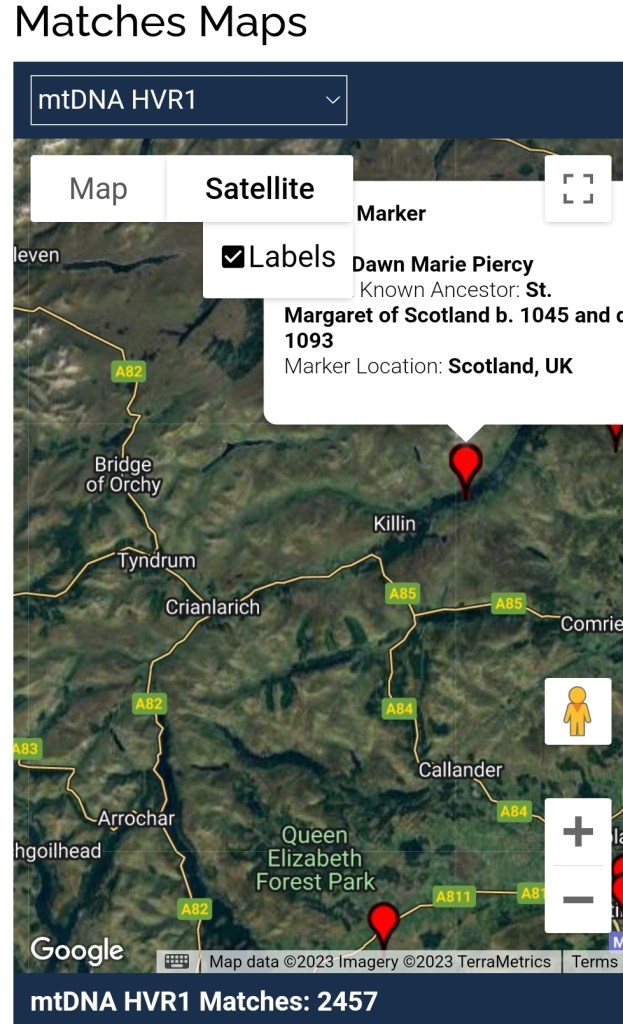
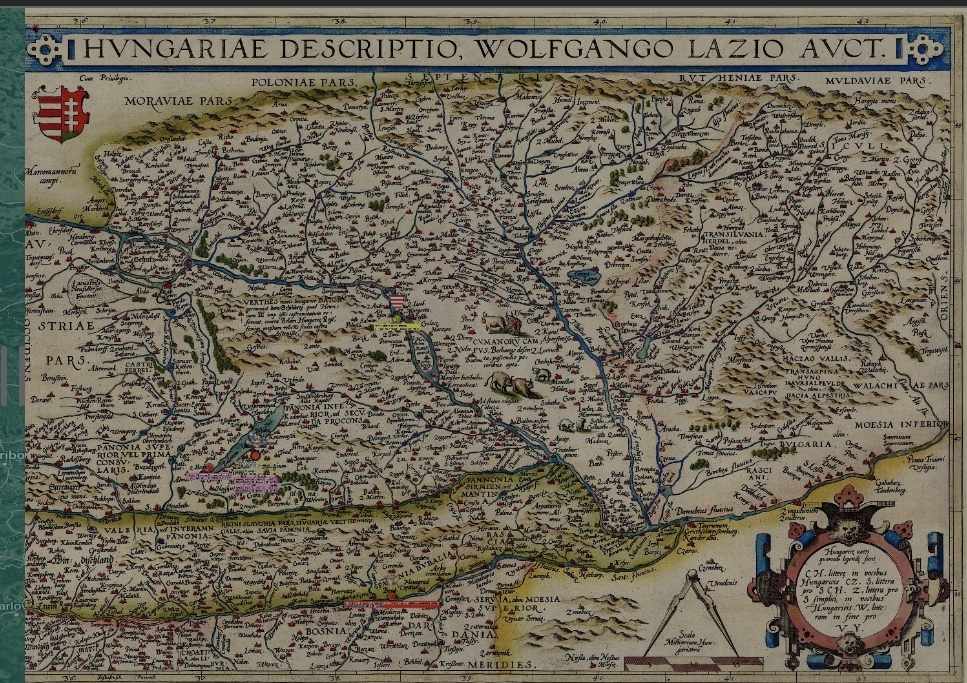
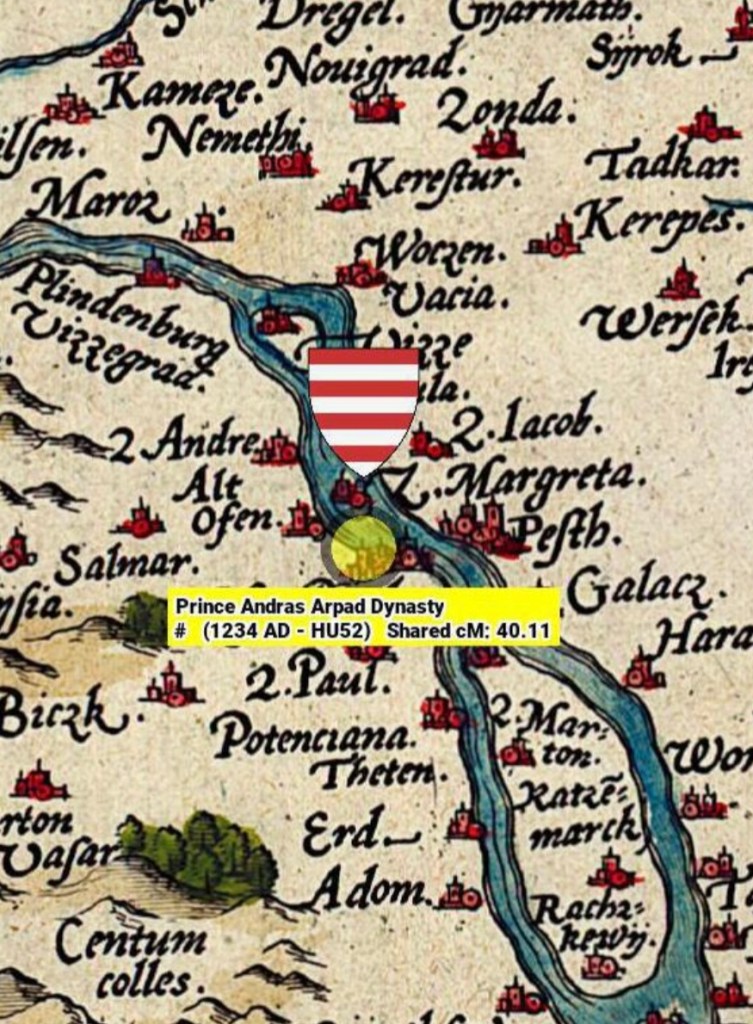
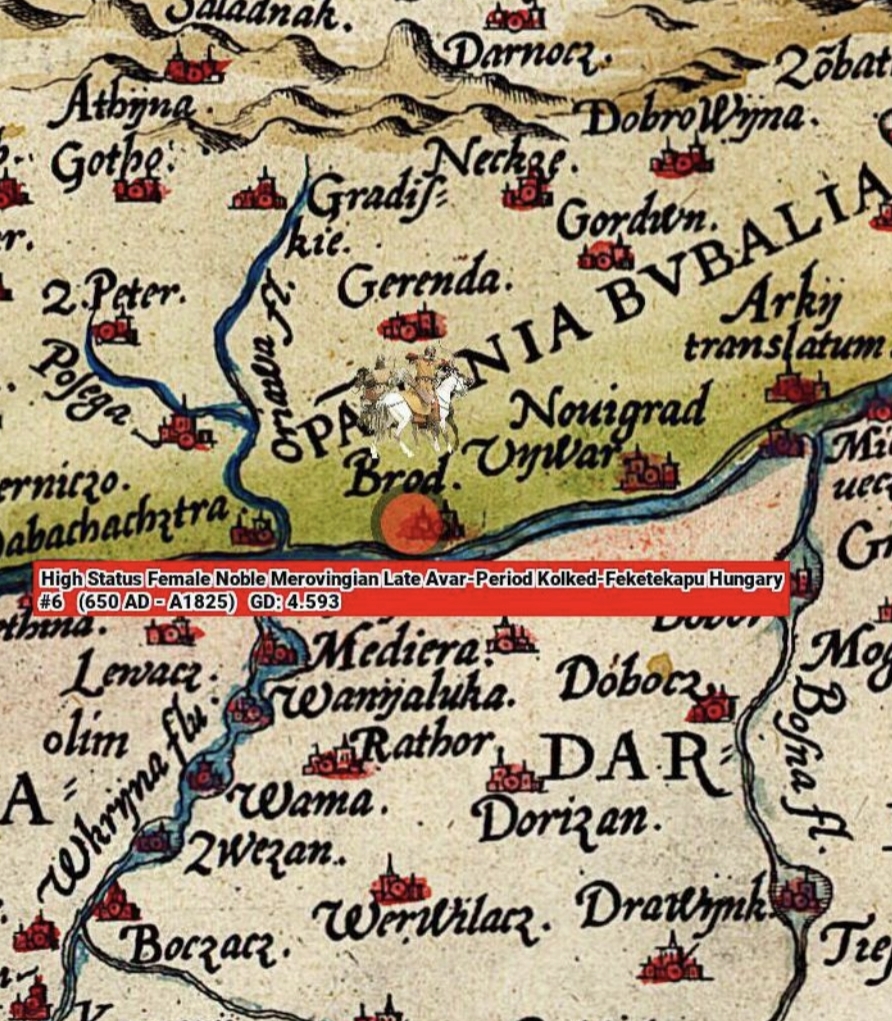
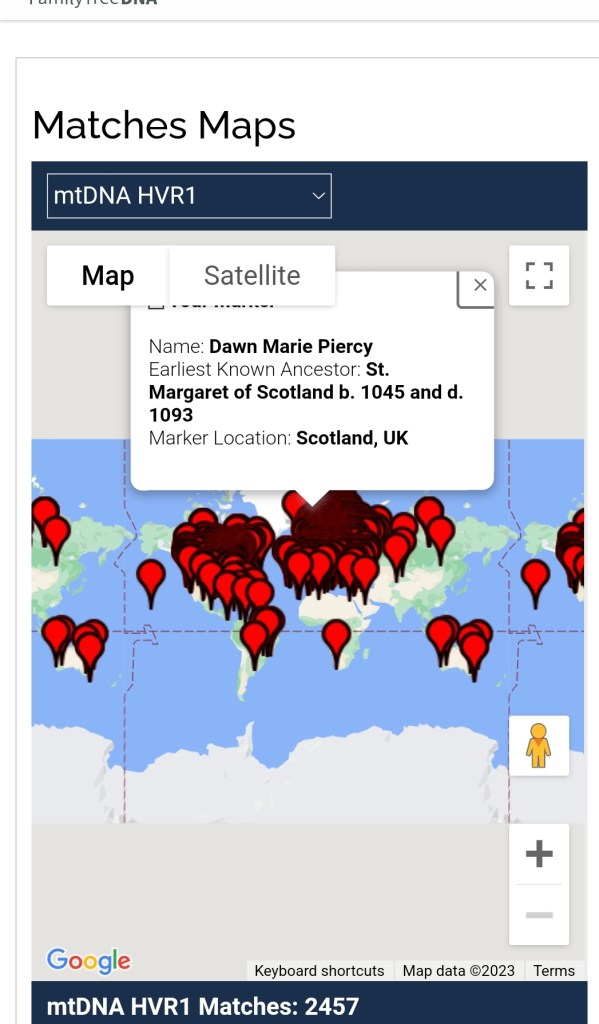
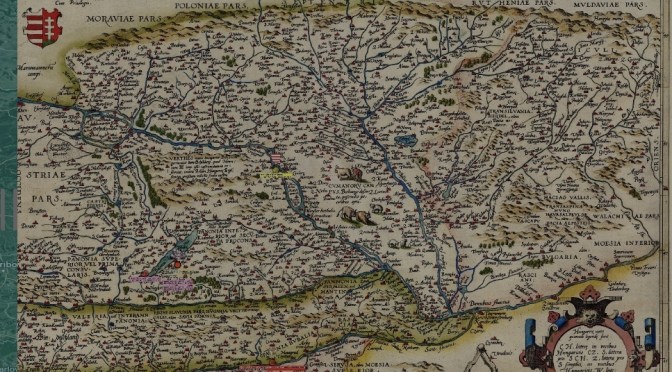
Though my mtDNA full sequence report shows St. Margaret of Scotland, it is people surrounding her I tested positive to. She was born in Hungry. Below you will find a map of ancient Hungry and my DNA that matched to. My Family Finder, and my mtDNA full sequence report was done by Family Tree DNA (ftdna), and then uploaded to My True Ancestry.
I hope this blog post can bring some light on my ancestors and maybe bring something to light that was never known to some. That truths unknown, may be made known, and that like many of us, they are just HUMAN, and ancestors to many of us. I am grateful for them, because of them I exist today. They went through many hardships, may they RIP 🙏.
~Dawn Piercy, PhD
 DP Family Tree
One thought on “Martyr’s, Monk’s, Saint’s, and Mayhem”